
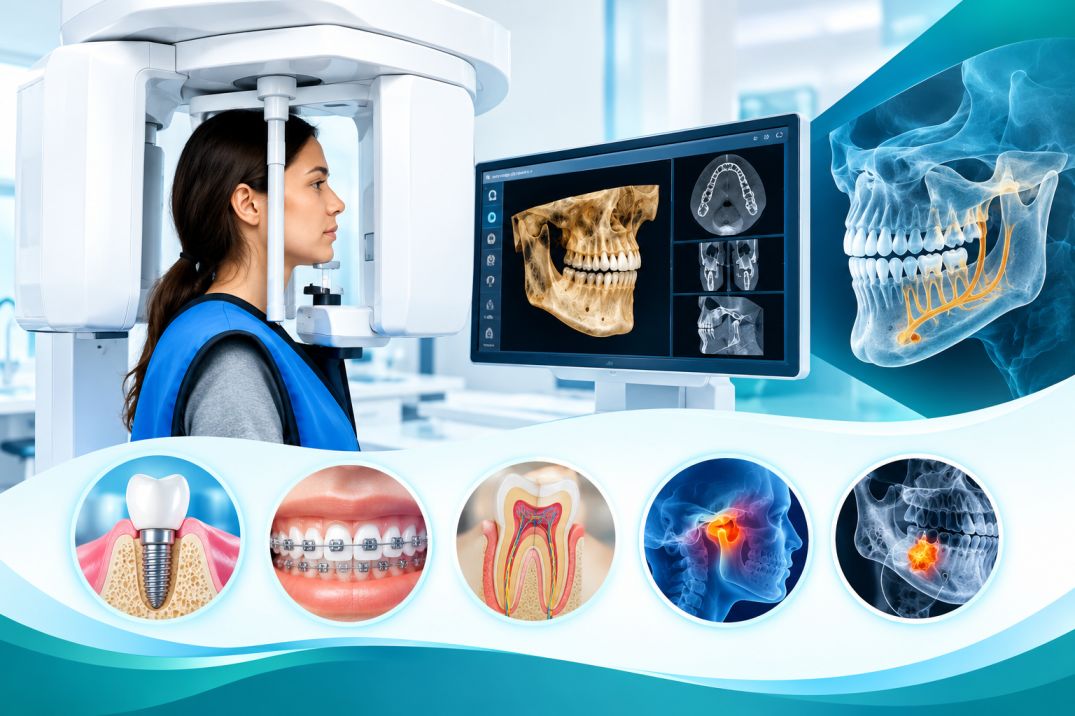
A dental CBCT scan (Cone Beam Computed Tomography) is a specialised 3D X-ray examination that creates detailed images of the teeth, jawbones, nerves and selected surrounding structures. Unlike a conventional dental X-ray, which mainly provides a two-dimensional view, CBCT allows a dental professional to examine the area in three dimensions.
How does a dental CBCT scan work?
During the scan, the CBCT machine rotates around the patient’s head and captures multiple X-ray images from different angles. Specialised software reconstructs these images into a detailed 3D representation. This can provide high-resolution anatomical information, with a relatively short scanning time.
When might you need a dental CBCT scan?
A dental professional may recommend CBCT when a three-dimensional view is needed to answer a specific clinical question or support treatment planning. It is not required for every dental patient or every routine check-up.
1. Dental implant planning
CBCT can help clinicians assess the quantity and quality of available jawbone before dental implant placement. The 3D view can also help them understand the anatomy of the proposed implant site when planning treatment.
2. Orthodontics
In selected orthodontic cases, detailed 3D information can support treatment planning, particularly when there are complex bite problems (malocclusions) or when orthognathic surgery is being considered.
3. Endodontics (root canal treatment)
CBCT may assist an endodontist in evaluating complex tooth anatomy and investigating selected problems, helping the clinician make a diagnosis and plan an appropriate treatment strategy.
4. Temporomandibular joint (TMJ) evaluation
CBCT can show the bony components of the temporomandibular joints. This information may contribute to the assessment of selected TMJ conditions, including osteoarthritis, ankylosis and some internal joint problems.
5. Oral and maxillofacial conditions
CBCT can help visualise changes in the jawbones, including certain osseous lesions, cysts, tumours and impacted teeth. The images may contribute to diagnosis and treatment planning when clinically indicated.
Is a CBCT scan suitable for everyone?
No. Although CBCT offers valuable 3D information and can use a relatively low radiation dose compared with some other CT examinations, it still involves exposure to X-rays. Its benefits, limitations and radiation considerations should be assessed before the scan is prescribed.
Key takeaway
Dental CBCT has expanded the information available for selected dental diagnoses and treatment plans. A qualified dental professional should decide whether the scan is justified for the individual patient and interpret the findings in the context of the clinical examination and history.